Key Research Areas
1. NeuroAI
About
1. I work broadly in NeuroAI, combining neural signal processing, machine learning, computational neuroscience, and diagnostic medicine. My primary research program develops foundation models for EEG and other physiological signals, with the goal of learning robust and clinically meaningful representations of brain activity across subjects, devices, and recording conditions. This work supports computational biomarkers for neurological diagnosis, especially epilepsy and dementia, as well as cognitive and brain-state modelling relevant to attention, workload, performance, and human-machine interaction. After my doctoral work, I founded Mannas to translate these technologies beyond the laboratory into deployable clinical and commercial systems for patients, clinicians, and neurotechnology applications. In parallel, my group studies biological neural systems as examples of efficient computation under constraints of energy, wiring, noise, and limited data. This includes connectome-constrained modelling of the Drosophila visual system, where energy-information tradeoffs, wiring geometry, and eligibility-trace plasticity offer clues for designing efficient brain-inspired learning algorithms.
Recent Publications
Courses Taught
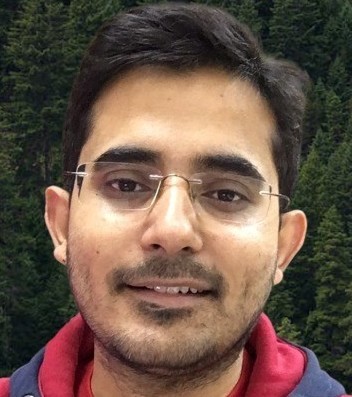
Siddharth Panwar
Designation: Assistant Professor
- Email: siddharthpanwar@iitmandi.ac.in
- Contact No.: 01905-267120
- Personal Website: https://labs.siddharthpanwar.com/
- Google Scholar: https://scholar.google.com/citations?user=X1PTp24AAAAJ&hl=en